Keynote Speakers
All archaeology is maritime archaeology: Land, sea and story in Western Australia
The Western Australian Museum holds a globally significant collection of artefacts from the first archaeologically excavated shipwrecks in the Southern Hemisphere. Among these are the remains of four Dutch East India Company vessels wrecked along the Western Australian coast in the 17th and 18th centuries—sites that continue to shape maritime archaeological discourse more than fifty years after their excavation. The 1980s and 1990s saw a wave of major excavations of colonial shipwrecks and associated maritime places, further expanding the Museum’s holdings and contributing to the development of maritime archaeology as a discipline. This period of excavation has been well documented in existing historiographies (Henderson 1986; Green 1989, 2004; Gibbs 1994; McCarthy 1998, 2006; Staniforth and Hyde 2001). Over the last twenty-five years, the Western Australian Museum’s maritime archaeology program has evolved in response to global shifts in archaeological theory and practice. These include interdisciplinary approaches, maritime landscape and seascape studies and an increased focus on Indigenous and cross-cultural perspectives. Likewise there is a growing commitment to environmental and cultural advocacy, alongside urgent efforts to decolonise collections and narratives. This keynote explores the Museum’s work during this period, highlighting significant project collaborations with universities and government agencies but also those that are centred on public engagement and the active involvement of local communities. Special focus is given to the ongoing research of previously excavated collections—many of which have only received minimal identification—and the stories they reveal. Situating the Museum’s work within national and international archaeological developments, this presentation reflects on the enduring significance of maritime sites—particularly in a region where oceanic movement has profoundly shaped cultural and historical trajectories. It also seeks to amplify voices and histories that have long been overlooked, offering a nuanced appraisal of maritime archaeology that is both inclusive and forward-thinking.
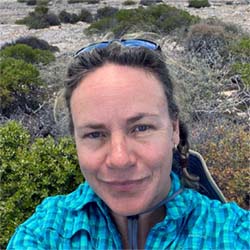
Dr Corioli Souter, Western Australian Museum
Corioli Souter is an archaeologist, curator and Head of the Department of Maritime Heritage at the Western Australian Museum. She has been a practicing archaeologist since 1992 also contributing to exhibition development, film documentaries, academic teaching, and capacity building both in Australia and internationally. Corioli played a key curatorial role in the development of Boola Bardip, the Western Australian Museum’s landmark redevelopment, helping shape its conceptual and thematic frameworks and curating major content. Her research and community projects align with the Museum’s ‘people-first’ philosophy, promoting place-based, collaborative interpretation of maritime archaeological sites across Western Australia and the Indian Ocean region. Committed to ethical, inclusive, and sustainable practices, she advocates for greater accessibility to underwater cultural heritage and museum collections.
Towards the establishment of an Australian Indigenous Heritage Commission: It's about time
This keynote will explore the need for an independent Commonwealth Government Indigenous/First Nations’ Heritage Agency (or Australian Indigenous Heritage Commission) with relevant legislation that finally respects and adequately protects the world and nationally significant history and heritage sites and places of Australia and its peoples.
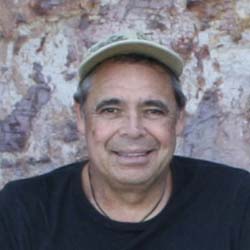
Dave Johnston-Pitt, Australian Indigenous Archaeologists Association and Australian National University
Dave Johnston-Pitt is Australia’s first academically qualified Indigenous Archaeologist, graduating with his Honours degree in Archaeology in 1989 from the Australian National University under the tutelage of Emeritus Professor Isabel McBryde (‘ANU’s Indigenous Engagement Champion’ and the collective champion of Australia’s first Indigenous Archaeologists in the late 80’s and early 90’s).
He has worked as a consultant, academic, volunteer Indigenous heritage activist, Co-film producer with Stuart Cohen, Bottle. Brush Media (Films; Millpost Axe Quarry; Gollion Ochre Quarry; I Remember the Dungeon with Dr Matilda House, etc), documentary film host (Foxtel History Channel: Coast Australia Series 4; and various ABC and SBS heritage documentaries), Indigenous Educator and continues to lobby and promote truth telling in Australia’s history and speaking out to further de-colonise our Australian University Archaeology Departments (eg. recruitment of Indigenous archaeologists and Indigenous lecturers teaching ‘our’ Indigenous content).
In 2014, Dave was awarded the Commonwealth Governments’, ‘Sharon Sullivan National Heritage Award: for his contribution to the Nations Indigenous Heritage Environment and his continual influence on practice’.
In recent years Dave has experienced the joy of fulfilling his lifetime quest of finding and reconnecting with his Queensland biological family (the Pitt’s) and his home country/s. He has ancestral decent to Erub (Darnley Is; Torres Strait Islands); the Nunnukul/Ngugi of the Quandamooka peoples (Stradbroke Is and Moreton Bay Qld); the Inagai/Goa people of Qld; as well as to England (the Atherton’s of Atherton Tableland) and Jamaica.