
Plenary Sessions
DAY 1 - WEDNESDAY 2 DECEMBER
A city on sacred land: The ongoing struggle to reconcile Adelaide and Kaurna cultural heritage
Abstract
The Karrawirraparri (River of the Redgum Forest) flows through the heartland of traditional Kaurna country with ceremonial, meeting, residential and burial places. From 1836, this also became the centre of the city of Adelaide, South Australia’s capital. For the last 190 years, Kaurna people have struggled to survive and to retain their culture and heritage, while a capital city spreads spreads across their traditional Country, infilling and covering its own former rural hinterland. Today the rate of impacts on Kaurna cultural heritage places and Traditional burial places is higher than ever, without any consistent development or works planning mechanisms for cultural heritage assessment at State or Local Government levels, and an Aboriginal Heritage Act that has no prescribed due-diligence processes for development assessment and rubbery penalty provisions that are never used.
In this Kaurna Plenary Session, Traditional Owners introduce the tangible and intangible cultural heritage of Kaurna Country and discuss the main issues they face and initiatives they are using to have Kaurna cultural heritage recognised, respected and preserved in the Adelaide region. They describe the enduring cultural significance of these special places and their vision for creating a future Adelaide that celebrates Kaurna culture not just in name, but in real life.
Two heritage practitioners who have worked with Kaurna Traditional Owners for many years contribute short summaries of major Kaurna cultural heritage mitigation projects and research results where the archaeological records of traditional Kaurna Villages, ceremonial gathering places and cemeteries all combine with Kaurna cultural knowledge and ethnographic and historical records to enrich the stories of the past and strengthen cultural continuity and scientific knowledge for the future.
PRESENTERS:
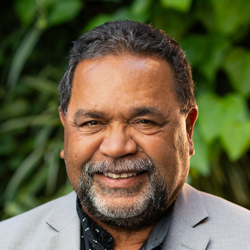
Tim Agius
Kaurna Traditional Owner & Chairperson, Kaurna Yerta Aboriginal Corporation
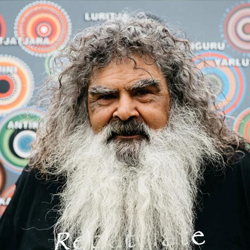
Jeffrey Newchurch
Kaurna Traditional Owner & Kaurna Repatriation Supervisor

Allan Sumner
Kaurna Traditional Owner & Secretary, Kaurna Yerta Aboriginal Corporation

Alison Harvey
Kaurna Traditional Owner & Heritage Workforce Participation Manager, RAW Personnel
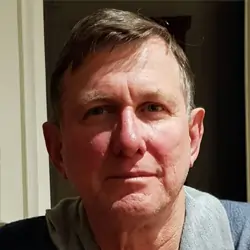
A/Prof Neale Draper
Principal Heritage Consultant, Neale Draper & Associates and A/Professor in Archaeology, Flinders University
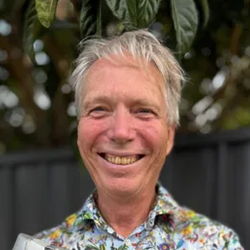
Dr Colin Pardoe
Colin Pardoe Bio-Anthropology & Archaeology
DAY 3 - FRIDAY 4 DECEMBER
We remember, and then we act: The discipline in sharing power on PKKP Country
Abstract
Most conversations about heritage protection and industry still talk past each other. The language used to describe how the two are reconciled (partnership, engagement, consultation) assumes a process in which Traditional Owners are informed, invited, or asked for input, but someone else makes the decisions. The archaeologist decides what's significant, the company decides the timeline, the government decides what counts as adequate process. When that happens, agreements look solid on paper and fail the moment they're tested: sites are lost, trust breaks, and Traditional Owners spend their energy managing a process that was not built to give them real power in the first place.
In this presentation, representatives of the PKKP Aboriginal Corporation set out a model of co-management that resets the balance between Traditional Owners, industry, and heritage practitioners. Developed through six years of negotiations, and shaped by a history of real loss, broken promises and hard negotiation, the model is grounded in free, prior and informed consent, a principle that has existed in policy language for decades but has largely been treated as an aspiration rather than an operational reality. PKKP offers a working example of what that principle looks like in practice, within a Pilbara context where the pressure for land access and development routinely outweighs cultural priorities and authority.
The model rests on three principles. First, cultural authority underpins the direction and desired outcomes before any technical or commercial process begins; PKKP's own governance and knowledge shape decisions from the outset, rather than being brought in to endorse decisions already made elsewhere.
Second, cultural authority is not exercised by refusing to engage. PKKP has departed from an assumption common in the sector, that resisting industry is the surest way to protect Country. Resistance can hold a line, but it rarely moves one. Once industry knows it will be met with opposition regardless of what it does, it has no reason to change. PKKP's approach is to sit at the table and use that position to set the terms, including what gets protected, how decisions are made, and who holds the power to say no. The result is neither accommodation nor a fatalistic acceptance that Traditional Owners cannot “win” against industry; it is industry restructuring itself around Traditional Owner authority.
Third, and most difficult to navigate, co-management means sharing power rather than simply reversing existing balances of power. Technical expertise remains essential; the discipline lies in knowing when cultural authority should lead, when specialist expertise should lead, and when each should step back. This is a skill PKKP has developed intentionally, and one that industry has often found difficult, because ceding authority can feel uncomfortable or commercially risky. That judgement shifts with circumstance, whether leadership rests with Traditional Owners, archaeologists, lawyers, engineers or industry representatives. The challenge is not deciding who holds power once and for all, but determining who should lead at a particular moment and why.
PRESENTERS:
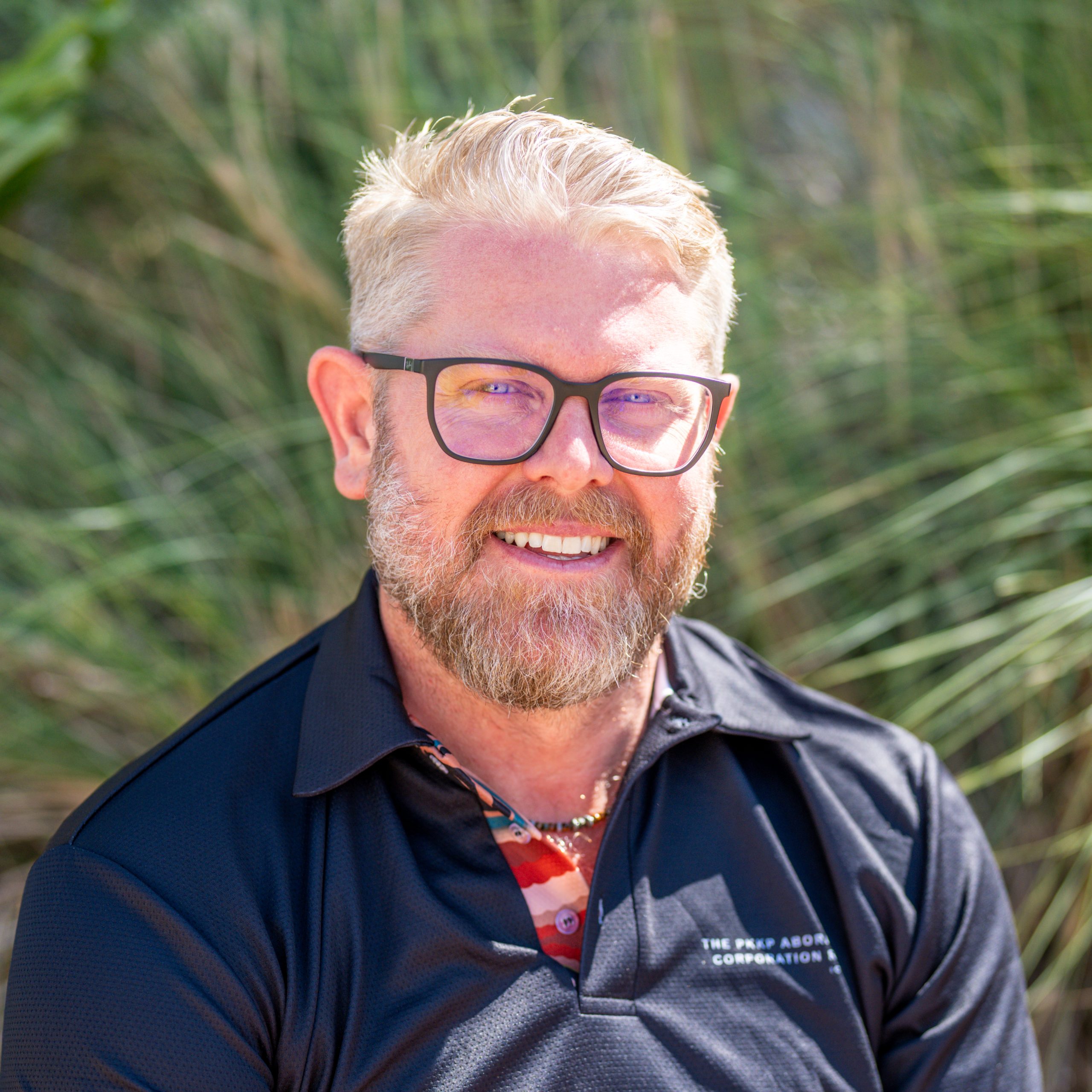
Dr Jordan Ralph
Deputy Chief Executive,
PKKP Aboriginal Corporation
Sandra Hayes
Puutu Kunti Kurrama Traditional Owner & Chairperson, PKKP Aboriginal Corporation
Terry Drage
Pinikura Traditional Owner & Director, PKKP Aboriginal Corporation
Burchell Hayes
Puutu Kunti Kurrama Traditional Owner & Chairperson, Puutu Kunti Kurrama Land Committee
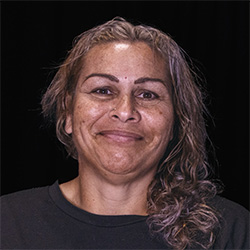
Toni Akuila
Pinikura Traditional Owner & Director, PKKP Aboriginal Corporation
Tim Agius
Kaurna Traditional Owner and Chairperson, Kaurna Yerta Aboriginal Corporation
Uncle Tim Agius is the Chairperson of the Board of Directors of Kaurna Yerta Aboriginal Corporation, RNTBC for the Kaurna Native Title Determination. He has considerable years of experience in establishing Aboriginal services in health, legal, public sector, State and Commonwealth policy and strategic reform, and in Aboriginal NGOs.
Jeffrey Newchurch
Kaurna Traditional Owner and Kaurna Repatriation Supervisor
Uncle Jeffrey Newchurch is a proud Kaurna man with blood connections from far Western Australia to Victoria and beyond. He has an extensive knowledge and experience of Kaurna and other Aboriginal community landscapes and cultural footprints and Songlines. His powerful work in repatriation and community engagement is well respected. He is deeply passionate about caring for Country, environment, and empowering youth.
Allan Sumner
Kaurna Traditional Owner and Secretary, Kaurna Yerta Aboriginal Corporation
Allan Sumner is of Kaurna, Ngarrindjeri and Yankunytjatjara descent and is the Secretary of the Board of Directors of Kaurna Yerta Aboriginal Corporation. He has a long history in promoting traditional culture and is a prominent artist (particularly public sculptures) and designer, including the current AAA Adelaide 2026 conference art.
Alison Harvey
Kaurna Traditional Owner and Heritage Workforce Participation Manager RAW Personnel
Alison has worked in Kaurna heritage since she was 16 years of age and has a great passion for protecting and preserving Kaurna heritage on Kaurna Yerta.
A/Prof Neale Draper
Principal Heritage Consultant Neale Draper & Associates, Associate Professor in Archaeology, Flinders University
Neale Draper is an Adelaide-based anthropologist and archaeologist specialising in Indigenous cultural heritage management and cultural mapping, and is an honorary Associate Professor in Archaeology at Flinders University.He has worked with the Kaurna community for over 40 years, including as the expert anthropologist for the Kaurna Native Title consent determination for Adelaide.
Dr Colin Pardoe
Colin Pardoe Bio-Anthropology & Archaeology
Colin Pardoe is a retired archaeologist. His studies in biology, stone tools and residential patterning are guided by a spatial framework that emphasises the links between people: gene flow, trade and interaction. Most of his time is spent in the Murray Darling Basin, where ‘Archaeology in the service of Conservation’ is a continuing goal.
Dr Jordan Ralph
Deputy Chief Executive, PKKP Aboriginal Corporation
Jordan Ralph is an archaeologist, heritage practitioner, and executive leader whose research spans Indigenous archaeology, cultural heritage governance, contemporary material culture, and collaborative research methodologies. His work explores the intersections of material culture, public policy, and Aboriginal community dynamics in remote Australia. He has published across archaeological and heritage studies and held senior roles in Aboriginal organisations and industry. As Deputy Chief Executive of the PKKP Aboriginal Corporation, Dr Ralph is a recognised expert in negotiating and implementing native title and heritage agreements in the resources sector. He currently serves as President of the World Archaeological Congress.
Sandra Hayes
Puutu Kunti Kurrama Traditional Owner and Chairperson, PKKP Aboriginal Corporation
Sandra Hayes is a Puutu Kunti Kurrama Traditional Owner and the current Chairperson of the PKKP Aboriginal Corporation. She has served on the PKKPAC Board for many years and has been a leading voice in the Corporation's recent agreement-making with resource companies operating on PKKP Country, including the 2026 Native Title and Co-Management Agreement with Fortescue, which updated and replaced the original 2010 Land Access Agreement and built on the landmark Co-Management Agreement PKKP signed with Rio Tinto the previous year.
Terry Drage
Pinikura Traditional Owner and Director, PKKP Aboriginal Corporation
Terry Drage is a Pinikura Traditional Owner and a Director on the PKKPAC Board. He has played a leading role in negotiating co-management and native title agreements with major resource companies on PKKP Country, including Rio Tinto and, more recently, Fortescue. He is a strong advocate for Traditional Owner decision-making being central to how mining happens on Country, and for agreements that protect heritage and create lasting benefit for PKKP people rather than relying on government or the courts. He also serves as Chairperson of PKKP Enterprises.
Burchell Hayes
Puutu Kunti Kurrama Traditional Owner and Chairperson, Puutu Kunti Kurrama Land Committee
Burchell Hayes is a Puutu Kunti Kurrama Traditional Owner and Chairperson of the Puutu Kunti Kurrama Land Committee. As a former Director of PKKPAC, he has played a central role in strengthening PKKP's relationship with Rio Tinto and shaping the Corporation's approach to heritage protection. He is a strong advocate for relationships, not regulation, as the key to protecting Aboriginal cultural heritage, and has written publicly on the need for government and industry to engage Traditional Owners as genuine partners in decisions affecting their Country.
Toni Akuila
Pinikura Traditional Owner and Director, PKKP Aboriginal Corporation
Toni Akuila is a Pinikura Traditional Owner and a Director on the PKKP Aboriginal Corporation Board, where she has served for a number of years, contributing to the Corporation's governance and to decisions that protect PKKP culture, Country and heritage for future generations. She also serves on the Pinikura Land Committee and the Pinikura Heritage Committee, and participates in many heritage surveys, helping identify and safeguard significant sites on Pinikura Country. Outside her governance and heritage responsibilities, she has a strong interest in travel and exploring new places and cultures.